
Someone comments “add me on FB” and you freeze for a second. Is that Facebook, or something you missed? You are not alone, and the confusion is fair. The FB meaning looks obvious until you spot it in a reply thread, a gaming lobby, or a bio full of other abbreviations.
FB meaning in short: FB almost always stands for Facebook. In some chats and comment threads it can also mean follow back, fall back, or first blood in gaming. The platform and the words around it quickly tell you which meaning applies.
This guide walks through every common FB meaning, where each one comes from, and how to use it without confusing anyone. Examples include the way people in the USA, India and Pakistan actually type it.
The Simple Answer: FB Stands for Facebook
The FB meaning is simple: FB is the standard short form of Facebook, the social network. If you see “FB” next to words like page, group, post, profile, friend or message, it means Facebook almost every time.
Here is how that looks in real life:
- “Check my FB page for the event details.”
- “Send me a message on FB, I rarely check email.”
- “Did you see her FB post from last night?”
- “I deleted the FB app but kept Messenger.”
In Pakistan and India, people often mix languages and still keep FB intact. “FB pe message kar do” simply means “message me on Facebook.” The FB meaning stays the same even when the sentence around it changes language.
One more point worth knowing: the FB meaning points to a nickname, not a different platform. When someone says “my FB,” they mean their Facebook account, nothing more exotic.
You May Also Like This: TB Meaning Slang: 5 Mistakes That Confuse Everyone
Where Does the Abbreviation FB Actually Come From?
The abbreviation FB comes from the first letters of the two syllables in Facebook, a shortcut people naturally reached for because typing the full name takes longer. The FB meaning grew out of ordinary habits: texting, tagging and saving keystrokes.
Early Internet Shorthand Culture
Online shorthand is older than social media. Chat rooms, forums and instant messengers pushed people to cut words short: BRB, LOL, ASL. When Facebook spread beyond college campuses in the late 2000s, users shortened the name the same way they shortened everything else. Two letters were faster than eight, and the FB meaning stuck.
From Texting to Hashtags
Text messages used to have tight character limits, and every letter counted. Then Twitter and Instagram made short tags and hashtags normal. Writing “FB” fit neatly into a tweet, a caption, or a phone-sized bio. That is why the FB meaning feels so natural on mobile screens even today.
Official Recognition
Facebook itself leaned into the short form. The company owns the short web address fb.com, and its short links have used fb.me. Its stock also traded under the ticker symbol FB for years, until Meta Platforms changed it to META in December 2022. So the abbreviation was never just slang. It carried business weight too, which helps explain why the FB meaning is understood so widely.
Why Is FB So Popular Among Social Media Users?
FB is popular because it is short, clear and instantly recognized by almost anyone who has used the internet. Short words win in fast conversations, and the FB meaning needs no explanation for most people.
A few practical reasons keep it alive:
- Speed. Two letters are quicker than eight, especially on a phone keyboard.
- Space. Bios, captions and ad headlines have limits. FB fits where “Facebook” sometimes does not.
- Familiarity. Most people already know the FB meaning, so nobody stops to decode it.
- Habit. Many users typed FB for years and never changed.
- Shared language. People in the USA, India and Pakistan all use it, which makes it a rare bit of slang that travels well.
FB also feels casual. Writing “Facebook” sounds a little formal in a quick chat.
Other Meanings of FB You Might See Online
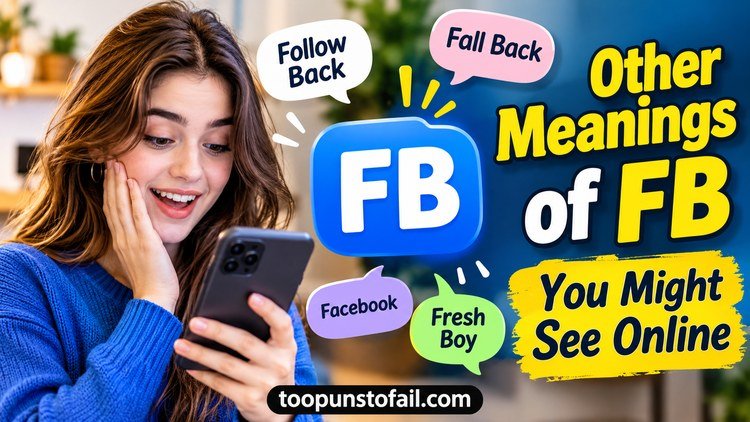
FB can mean more than Facebook. Depending on the platform, the same two letters can signal “follow back,” “fall back,” or a gaming term. The FB meaning you pick should always match the setting you see it in.
Here is a quick comparison before we go through each one:
| Where you see it | What FB likely means | Example |
|---|---|---|
| Facebook comments, bios | “Find me on FB” | |
| Instagram or X replies | Follow back | “Followed you, fb?” |
| Time and clock talk | Fall back | “Clocks fb tonight” |
| Business pages, ads | Facebook (platform) | “FB ads manager” |
| Buy and sell posts | Facebook Marketplace | “Got it off FB” |
| Gaming chat | First blood | “FB to our mid laner” |
FB as “Follow Back”
On Instagram, X and similar apps, the FB meaning often becomes “follow back.” Someone writes “followed you, fb?” to ask you to return the follow. It shows up in comments, DMs and hashtag chains. You will also see #FBF, which can mean “follow back Friday” in follower-swap posts.
FB as “Fall Back”
“Fall back” comes from the daylight saving rhyme, “spring forward, fall back.” Here the FB meaning is a clock reminder. In places that change their clocks, people post “fb tonight” as a reminder to move clocks backward. Note that Pakistan and India do not currently use daylight saving, so this meaning appears less often in those regions. It is mostly a USA habit.
FB as “Facebook” in Business Contexts
In offices and marketing teams, FB is shorthand for the platform. “FB ads,” “FB pixel” and “FB insights” all point to Facebook tools. Sales teams and freelancers use it daily in emails and chat apps, so the FB meaning in business almost never leaves room for doubt.
FB as “Facebook Marketplace” (Informally)
In local buy-and-sell talk, the FB meaning often points to Facebook Marketplace specifically. A phone, a bicycle, a sofa: people say they got it “off FB” without naming the Marketplace section. It is informal, but widely understood.
FB in Niche Communities
Some communities give FB their own spin. In many online multiplayer games, the FB meaning is “first blood,” the first kill of a match. Baseball fans may see FB used for fastball, and American football discussions sometimes use FB for fullback. If you are in one of these groups, trust the local meaning over the general one.
How People Use FB in Everyday Language
People use FB the way they use any short, friendly shortcut: lightly, in casual spaces, and with an easy assumption that the reader will understand. The FB meaning stays steady, but the tone shifts depending on where it appears.
In Bios and Profiles
Bios have tight space. People write “FB: username” or “Find me on FB” to point followers to their Facebook page. On Instagram and X, this is one of the most common uses of the FB meaning you will see.
In Captions and Hashtags
Captions rely on the FB meaning to link a post with another platform: “Full video on FB.” Hashtags such as #FBLive and #FBReels connect posts to Facebook features. Keep it simple, because too many tags can look cluttered rather than clever.
In Business and Marketing
Marketers rely on the FB meaning in reports, ad briefs and social calendars. A typical line might read “Boost this on FB and IG.” Brands also use it in customer messages, like “Message us on FB for orders.” For small businesses in India and Pakistan, a Facebook page often acts as the shop front, so FB shows up everywhere in their promotions.
In Everyday Texting
Friends text each other “FB me” or “saw it on FB” without a second thought. The FB meaning in texting is relaxed and conversational, so there is little risk of sounding rude or strange.
What Does FB Mean in Facebook Comments and Messages?
In Facebook comments and messages, the FB meaning usually stays Facebook, but it can also carry “follow back” energy when people are swapping pages. The thread tells you which one.
Here is a quick way to decode the FB meaning:
- Look at who wrote it. Friends referencing the platform usually mean Facebook.
- Read the sentence. “Check my FB” is the platform. “Fb please” is likely follow back.
- Check the setting. A giveaway thread or page-promotion post often invites follow-backs.
- Spot the capitalization. Lowercase “fb” in a short reply leans toward follow back, though this is not a firm rule.
- Ask directly. If you are still unsure, one polite question solves it.
People on Reddit and Quora regularly ask whether “fb” in a reply is a request or a reference. The honest answer: it can be either. Nobody owns this abbreviation, so context decides.
FB vs. Other Social Media Abbreviations
FB sits among a family of short platform names. Understanding the neighbors makes the FB meaning easier to spot and keeps you from mixing platforms up.
| Abbreviation | Usually means | Notes |
|---|---|---|
| FB | Also “follow back” in some apps | |
| IG | Common in bios and captions | |
| YT | YouTube | Used in video links and comments |
| WA | Popular in India and Pakistan | |
| SC | Snapchat | Often used with usernames |
| X | X (formerly Twitter) | Many users still say “Twitter” |
A small tip: abbreviations get confusing when two platforms share a letter. FB and IG are clear, but “TW” or “TT” can point to different apps depending on who is typing. When writing for a broad audience, spell the name out the first time.
Common FB Related Slang Worth Knowing
Several slang terms orbit FB, and knowing them helps you read social feeds with confidence. These all connect back to the wider FB meaning culture.
- FBF: Flashback Friday, used for older photos. It can also mean “follow back Friday” in follower-swap posts.
- FB friend: Someone you know only through Facebook.
- FB stalking: Casually browsing someone’s profile. It is light-hearted slang, though privacy matters, so keep it respectful.
- FB group: A shorthand for community groups, from hobby clubs to local buy-and-sell pages.
Is FB Still Commonly Used in 2026?
Yes, FB is still commonly used in 2026, especially in casual chat, bios and business conversations. Facebook remains a major platform, so its nickname stays in everyday vocabulary. The FB meaning has not faded.
Some honest caveats. The FB meaning stays familiar, though younger users sometimes spell out “Facebook” or prefer other apps, so you may see FB less in teen-focused spaces. On the other hand, parents, small businesses, community groups and local sellers keep it busy. In India and Pakistan, Facebook pages and groups still serve many shops and creators, which keeps the abbreviation visible.
There is no official number I can quote for how often FB appears in messages, so treat claims about exact usage with caution. What you can rely on is simple: people understand it, and they keep typing it.
How to Use “FB” Correctly (Without Confusing People)
Use FB when your audience clearly knows what you mean, and spell out Facebook when there is any doubt. Good use of the FB meaning is mostly about reading the room.
Consider Your Audience
Friends and followers will get the FB meaning instantly. A new client, an older relative or a hiring manager might prefer “Facebook.” If you want to be clear to everyone, write “Facebook (FB)” once, then use FB afterward.
Watch the Context Clues
Before using FB, check which FB meaning the platform expects. On Instagram or X, someone may read it as “follow back.” On a gaming server, it could mean “first blood.” A quick look at where you are posting prevents most mix-ups.
Use It in Bios and Captions Freely
Bios and captions are made for shortcuts. Writing “FB: yourpagename” is neat, saves space and looks natural. This is the safest place to use the FB meaning in its short form.
Avoid Overusing It in Formal Writing
In reports, emails to clients or academic work, spell it out. Overusing abbreviations can make writing feel rushed. A mix of clear first-use naming and short follow-ups keeps things professional.
FB Meaning for Businesses, Pages, and Groups
For businesses, FB is shorthand for the Facebook platform and its tools. A shop might say “Order via FB,” and a marketer might write “FB campaign” or “FB page.” The FB meaning in business is practical rather than playful.
Here is how it shows up across common settings:
- Pages: “Follow our FB page for updates and offers.”
- Groups: “Join our FB group to share tips with other members.”
- Ads: “FB Ads Manager” refers to the tool for running paid campaigns.
- Customer service: “Message us on FB” signals a quick support channel.
- Local trade: Sellers post “Available on FB Marketplace” in listings.
A practical tip for owners: spell out “Facebook” in official materials like invoices, websites and legal pages, and use FB in casual posts where space is tight. This keeps the FB meaning clear while still sounding friendly. If your audience includes people who are newer to social media, add a short note the first time, such as “Facebook (FB).”
Why This Small Abbreviation Actually Matters
A two-letter abbreviation seems small, but the FB meaning shows how online language really works. Words shrink, meanings stack up, and the same letters can point to different things depending on the room you are in.
Misreading the FB meaning can cause small but real problems. You might follow a stranger instead of finding a page, or send a gaming request to the wrong place. For businesses, a confusing abbreviation can cost a customer who could not tell where to message you.
There is also a kinder side. Understanding slang helps people connect across ages and countries. A grandparent in Karachi, a student in Delhi and a seller in Texas can all say “FB” and be understood. That shared shortcut quietly makes online conversations feel easier.
Frequently Asked Questions About FB on Facebook
What does FB mean on Facebook?
On Facebook, FB means Facebook. People use it in comments, bios and messages as a quick nickname for the platform, such as “message me on FB.” In rare cases, it can mean follow back when users swap pages.
Does FB always mean Facebook?
No. FB usually means Facebook, but it can also mean follow back, fall back, or first blood in games. In sports talk, it may mean fastball or fullback. The platform and sentence context show which meaning fits.
Why do people abbreviate Facebook to FB instead of spelling it out?
People shorten Facebook to FB to save time, space and effort. Two letters are faster to type, fit small bio fields, and sound casual in chat. Habit also plays a part, since the shortcut became common years ago.
Is FB an official Facebook abbreviation?
Yes, partly. Facebook has used short forms such as fb.com and fb.me for web addresses and links. Its stock ticker was also FB until Meta changed it to META in December 2022. The everyday slang use grew from users.
Conclusion
Now you can read the FB meaning like someone who has been online for years. Most of the time it just means Facebook. Sometimes it asks for a follow back, reminds you to set clocks, or celebrates a first kill in a game. The trick is never to guess in a hurry: glance at the platform, read the sentence, and decide.
Your next step is simple. Next time you write a bio, caption or business post, choose FB or Facebook on purpose, based on who will read it. If you are unsure, spell it out once and shorten it afterward. That one habit keeps every FB meaning clear, friendly and easy for readers in the USA, India and Pakistan to follow.

I’m Andy Borowitz, an American writer, comedian, and satirist known for political humor and sharp social commentary. I helped create The Fresh Prince of Bel-Air and founded The Borowitz Report, a popular satirical news column. My work has also appeared in The New Yorker, earning recognition for its witty take on politics and current events.

1 thought on “FB Meaning: 4 Powerful Uses Everyone Should Know”